· Updated
Building RavenClip: recovery, AI checks, and costs
Why I chose persistent stages, what automated checks can prove, and what a hidden provider failure taught me.
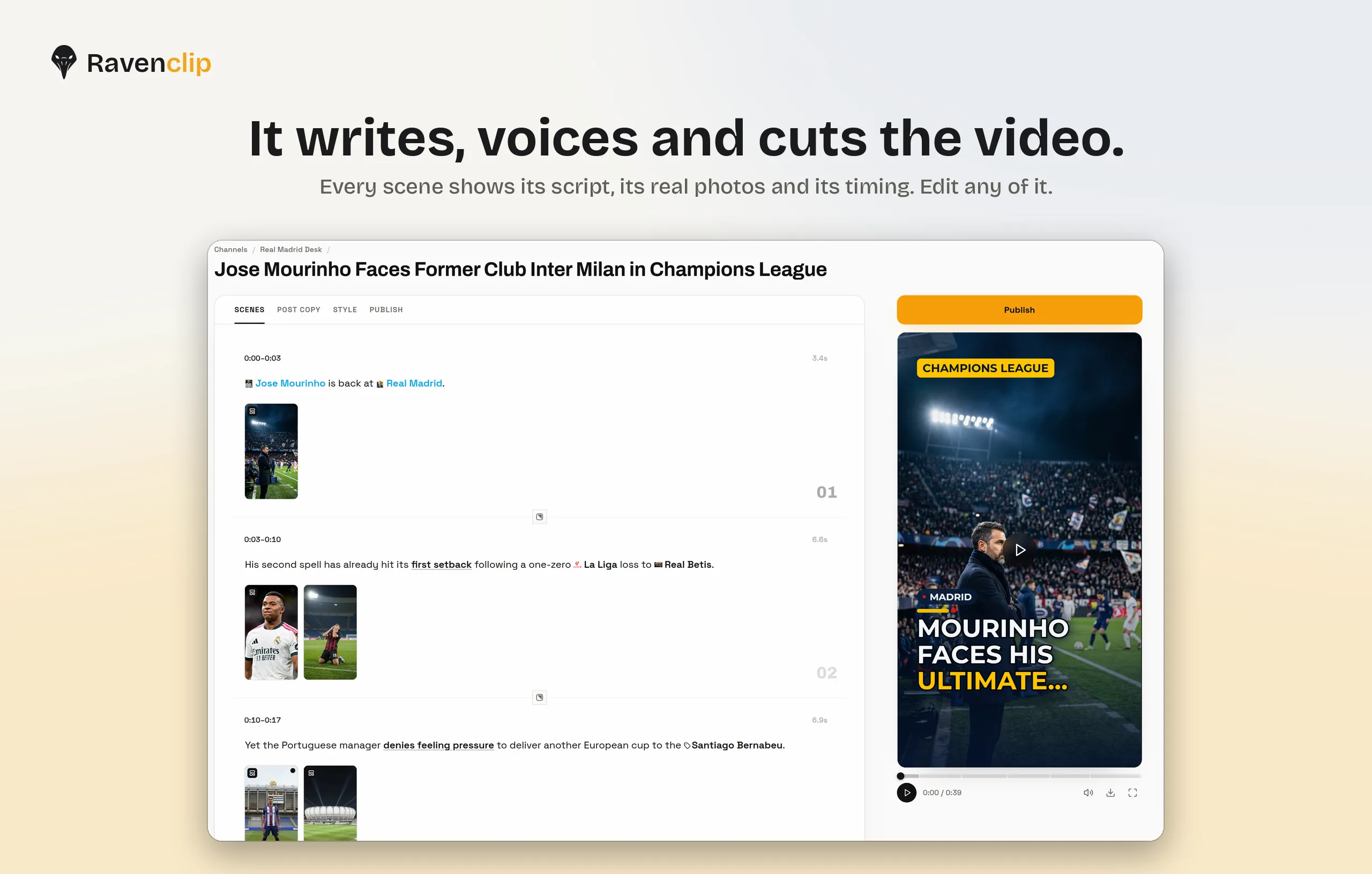
RavenClip turns news into short videos and publishes them on a schedule. I built and operate it on Laravel, React, a Node/Skia renderer and FFmpeg. The case study covers the product; this post covers the technical choices and their limits.
The short version
- 01Recovery9 s → 2 sMedian wait before rendering, once each stage starts the moment the last one finishes.
- 02Prompts15-18% fewerInput tokens per call after replacing a banned-phrase list with three principles.
- 03ChecksShape, not truthGates catch drift, bad hooks and length. They cannot confirm that a claim is true.
- 04Fallback25 daysA provider sat out of credit while fallback hid it. Monitors now catch this within hours.
- 05Costs$0.36Recorded API spend per rendered video, 1-25 September 2026.
- 06AI agents18 hoursScene-asset jobs failed after an agent’s bulk edit. Three safeguards followed.
Persist progress where recovery matters
Every stage saves its status in the database, so a failure resumes where it stopped instead of paying for the same generation twice. Voice and visuals run in parallel, then meet again at rendering.
voice branch
visual branch
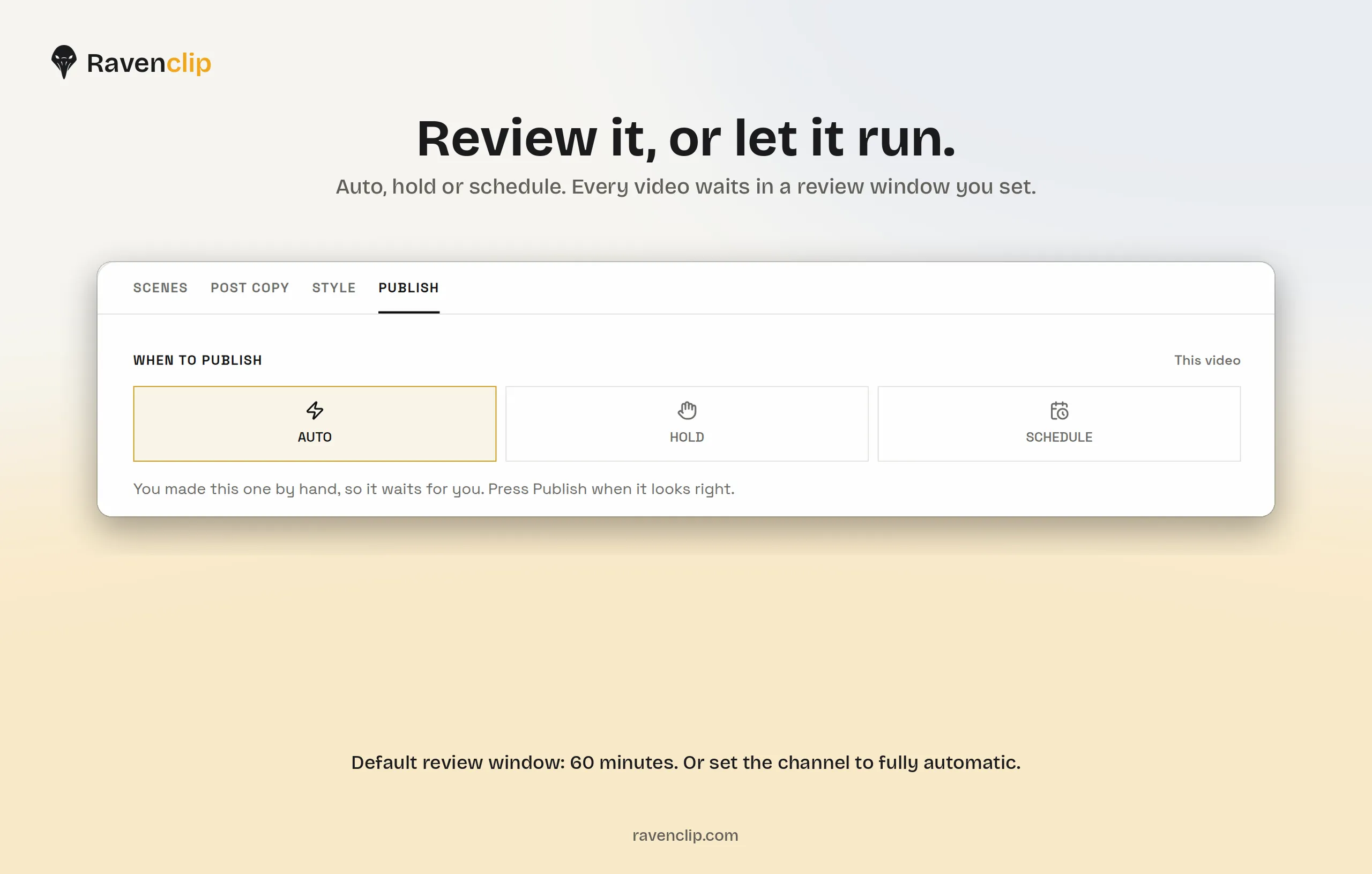
Voice and visual work run in parallel before rendering. Persisted stage results let retries reuse completed work. Publishing runs automatically or after customer review, according to the channel settings.
One worker per stage
A runner moves forward whatever is ready. A row lock stops two workers from claiming the same stage.
Ordered timeouts
Job timeout, then supervisor timeout, then queue redelivery. Recovery retries a stuck render with the assets it already has.
Publish once
State checks plus a unique database constraint: the same video cannot post twice.
One measurement corrected me. Starting each stage the moment the previous one finished fixed the median, not the whole delay.
- 9 s → 2 s
- Median wait before rendering
- ~1 min
- Slowest waits, unchanged
When I skip it
This adds state and recovery paths to maintain. For the short, fixed sequence after a user edits a scene, a simple job chain is still the better choice. The full machinery is for generation that runs unattended and publishes in public.
Give models a structure, then check the result
Outputs are structured and checked against schemas. Each stage gets its own thinking budget: simple sorting does not need the budget of scriptwriting.
// One narration beat, as the writer model returns it
type Beat = {
  adds: string;        // what new information this line brings; checked, then thrown away
  contentText: string; // the narration itself
};
Naming the new information before writing the line pushes the model to say something new every time.
Before
A long list of banned phrases. Fixing one phrase just produced a new version of the same problem.
After: three principles
- True
- Use facts from the source.
- Dense
- Add information in each sentence.
- Spoken
- Write words that work read aloud.
Plus one example for each recurring failure.15-18% fewer input tokens per call
Simpler instructions helped, but prompts alone still let some bad output through. That is what the gates are for.
Be precise about what a check proves
The system ranks drafts by their defects and tells a failed attempt exactly what to fix. A critic’s rewrite wins only if it also passes the gates and scores higher.
Checked or enforced
- The script stays on its subject
- The hook has the right shape
- Length and endings fit
- Later stages keep the approved narration, or fall back to the checked lines
- On-screen scores, standings and prices come from data sources, not from the model
Not proven
- That a claim is true. A false sentence built from words in the source can still pass.
- Spoken figures. They are not checked.
- Non-Latin scripts. They skip the subject check.
Monitor the fallback path
External calls share one mechanism for retries, key rotation and switching providers. Each task also has its own rule for what a fallback must keep.
When a call fails
- Temporary errorA few retries with growing delays
- 2 timeouts in a rowSwitch provider
- Empty balanceShared 30-minute cooldown
What a fallback must keep
- VoiceThe same speaker
- ImagesThe same quality level
- EmbeddingsNever mixed: their outputs do not compare
Checking only whether videos finished hid one failure for weeks.
Record costs and understand the omissions
Billable calls are recorded before the output is validated, because an unusable answer can still cost money. Each entry keeps the rate that applied at the time, and replaced attempts keep their cost rows.
$0.36 recorded API spend
~$0.09 infrastructure share
- Period
- 1-25 September 2026
- Recorded API spend
- $66.59
- Rendered videos
- 183
Not includedPayment feesMy timeSame-key retries, not fully priced apart
Code-scanning test
Finds paid integrations with no cost recording. It proves the recording exists, not that the price is right.
Daily audit
Checks for missing prices and for differences from what providers report.
Caching also needs enough traffic to pay off.
Caching, by call type
- EnrichmentFrequent: provider cache hits
- Scene directionToo rare to keep a cache warm, so I cut prompt size instead and left caching until volume justifies it
Building with AI and owning the mistakes
Coding agents
BuildInvestigateTest
Under my direction
Product scopePricingArchitecture
My session records include corrections to both code and business proposals, down to which features belong in paid plans. Agents still make mistakes that reach production.
- 23
- stale or leaking tests, collected after I removed CI to speed up releases, cleaned on 25 September
- ~1,300
- test definitions: a measure of coverage, not the absence of bugs
Next time I would keep a small syntax-and-smoke check from day one. The useful question is which failure paths are checked, and what happens when a check misses.
Keep the next improvement grounded
- 01
Keep the raw data
Store the data behind each measurement, not just the result.
- 02
Keep incident evidence
Hold it past short log windows.
- 03
Close the cost gaps
Finish the cost accounting, including retries on the same key.
RavenClip is an early product with three paying customers as of 26 September 2026. Running it shows me which abstractions help and which assumptions need another look. The case study tells the product side.